Sugar and Legacy: The Family Recipes Keeping America's Independent Donut Shops Alive
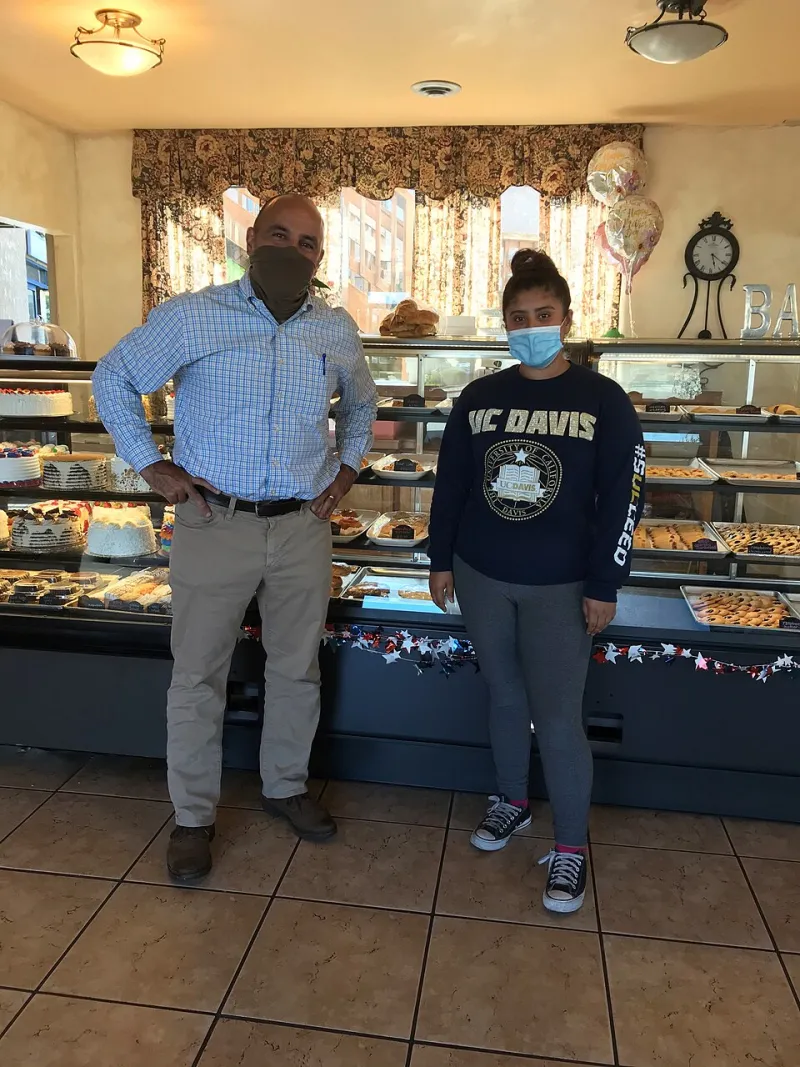
Photo: Creator:Jimmy Panetta, Public domain, via Wikimedia Commons
Every great family donut recipe has a ghost in it. A grandmother's instinct for when the oil is ready. A grandfather's preference for a touch more nutmeg than the written recipe calls for. A parent's adjustment made during a flour shortage in 1987 that somehow made everything taste better. These aren't mistakes or deviations — they're the living record of a family's relationship with their craft, encoded in dough.
Across the United States, a remarkable number of independent donut shops are still run by the same families that opened them decades ago. Second and third-generation owners are frying donuts in the same buildings, sometimes on the same equipment, almost always from the same foundational recipes their parents or grandparents developed. What keeps them going isn't nostalgia alone — it's an intimate, hard-won understanding of how their product works, and why.
What Gets Passed Down (and What Doesn't)
When Maria Solis took over her family's donut shop in San Antonio from her mother in 2014, she inherited three things: the building, the customer list, and a recipe card so worn it had been laminated twice. The card didn't have measurements in the conventional sense — it referred to "a coffee cup" of this and "a good handful" of that.
"My mom learned by watching her mom, and her mom learned by watching her mom," Maria explains. "The recipe card was more of a reminder than an instruction set. The real knowledge was in the hands."
This is the central challenge of generational donut-making: the most important information is often tacit. Baking science can explain why a recipe works, but the feel of properly developed dough — the way it springs back, the sound it makes when you slap it — is knowledge that lives in the body, not on paper. Passing it down requires presence, patience, and years of working side by side.
For the Solis family, that transmission happened naturally. Maria grew up at the shop, folding boxes before she was tall enough to see the fryer. By the time she was formally learning the recipes, she already knew them in the way you know a song you've heard your whole life — not note by note, but as a whole.
The Science of a Living Recipe
Here's something that surprises people outside the baking world: a recipe that's been made thousands of times tends to get better, not just more consistent. Each iteration is a data point. The baker learns how the dough behaves in winter humidity versus summer heat, how a new flour supplier's product requires a slight hydration adjustment, how resting times affect the final crumb structure.
Family donut shops carry this accumulated knowledge in a way that chains simply can't replicate. A corporate recipe is standardized across locations and locked down for consistency. A family recipe is alive — constantly being interpreted by someone who understands not just what the recipe says, but what it means.
That distinction shows up in the finished product in ways that are hard to articulate but easy to taste. The slight chew of a properly fermented old-fashioned. The way a good raised donut has a delicate shatter at the glaze before giving way to a pillowy interior. These qualities aren't accidental, and they're not easily reverse-engineered. They're the result of generations of refinement.
Adapting Without Abandoning
Of course, staying true to a heritage recipe doesn't mean refusing to evolve. The most successful multi-generational donut shops have found ways to honor their foundations while responding to changing tastes and ingredient availability.
James Park's family has operated a donut shop in the Koreatown neighborhood of Los Angeles since the early 1980s, part of the wave of Korean American families who became a quiet backbone of the California donut industry during that era. James, now in his late thirties, runs the shop with his father and has spent the last several years threading a needle between the classics that built the business and newer flavors that draw a younger crowd.
"Our old-fashioned and our glazed — those don't change," James says firmly. "But we've added things. A ube glaze, a black sesame cream filling. Those are us, too. That's our family in 2024, not just our family in 1983."
The key, he argues, is that new additions have to meet the same standard as the originals. They have to earn their place in the case. "My dad will try everything we add. If he says it's not right, we go back and work on it. He's got 40 years of knowing what right tastes like."
Competing Without Becoming Something Else
Independent donut shops face real competitive pressure from chains with massive marketing budgets and supply chain advantages. It's a challenge every family operator knows well, and the ones who've lasted have mostly arrived at the same conclusion: you can't out-chain a chain, so don't try.
What a family shop offers that no chain can is specificity. A regulars-only counter where the staff knows your order. A donut that tastes like this neighborhood, this family, this particular Saturday morning. These aren't marketing claims — they're genuine differentiators, and they're deeply tied to the family nature of the operation.
In Cleveland, the third-generation owner of a shop her grandmother opened in 1961 puts it simply: "People come here because this is the donut they grew up eating. I'm not competing with the chain down the street. I'm competing with their memory of what a donut should taste like — and I win that one every time."
She's not wrong. The shops that have survived long enough to become generational institutions carry a kind of cultural weight that money can't manufacture. They're landmarks, in the truest sense of the word.
The Recipe Goes On
The question every multi-generational donut family eventually faces is whether there's another generation ready to carry it forward. Some shops are finding that answer in unexpected places — a nephew who fell in love with baking in culinary school, a daughter who left a corporate job and came home, a community of loyal employees who've become family in everything but name.
What unites all of them is a belief that the recipe is worth keeping. Not because change is bad, but because what's been built over decades of daily work — the knowledge, the relationships, the community — is genuinely irreplaceable.
At Big Donut 55, we believe that every great donut has a story behind it. In the case of America's family-run shops, that story often spans lifetimes. And it's still being written, one batch at a time.