How Much Is Too Much? The Craft Donut Price Debate Is Getting Uncomfortable
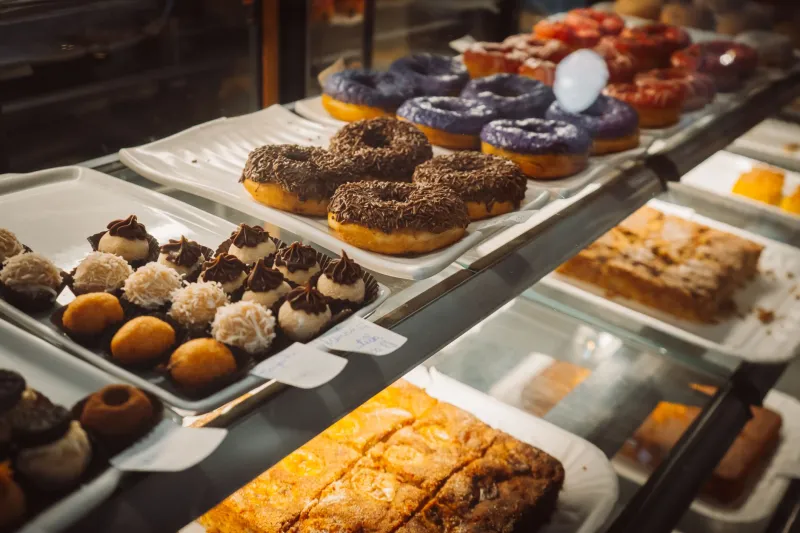
Let's start with a number: $8.50. That's what a single specialty donut costs at a well-regarded craft bakery in Brooklyn right now. It's filled with house-made pastry cream, topped with a mirror glaze that takes forty minutes per batch to prepare, and finished with a hand-painted chocolate detail. It sells out before noon almost every day.
And yet, something has shifted in the conversation around that price tag. Where a $6 donut once felt like a reasonable premium for quality, $8 or $9 is starting to generate a different kind of reaction — not just sticker shock, but genuine public debate about what artisan food is worth and who gets to decide.
The craft donut boom is running headlong into an economic reality check. And how it responds may determine which shops survive the next few years.
The Road to Premium Pricing
To understand where prices are now, it helps to trace how the industry got here. A decade ago, the average craft donut ran between $2.50 and $4 in most US markets. That felt steep compared to a Dunkin' or Krispy Kreme, but it was easy to justify — better ingredients, smaller batches, more interesting flavors, a local business worth supporting.
Then came a convergence of pressures. Ingredient costs climbed steadily, especially for high-quality dairy, specialty flours, and imported flavor components like high-grade vanilla, matcha, and specialty chocolates. Labor costs rose in tandem, particularly in coastal markets where minimum wage increases outpaced what small bakeries had budgeted for. Rent in the desirable urban neighborhoods where craft donut shops tend to cluster became increasingly punishing.
Bakers responded the only way they could: by raising prices. Gradually, then all at once. By 2022, a $5 donut was the new baseline at most craft operations. By 2024, $6 to $7 was unremarkable in major metros, and $8-plus had become a real category.
"Every time I raise prices, I lose sleep over it," says Carla Whitmore, who runs a six-year-old craft bakery in Portland, Oregon. "But when my butter costs go up 30 percent and my packaging doubles, I don't have a choice. The math is the math."
What the Science of Ingredients Actually Costs
One thing that gets lost in the pricing debate is just how much more expensive quality ingredients are compared to commodity alternatives — and how much that gap has widened.
Consider vanilla. Pure vanilla extract from Madagascar or Tahiti costs roughly 15 to 20 times more than imitation vanilla flavoring. For a shop that uses it in every batch of dough and glaze, that's not a rounding error. It's a structural cost decision that affects every item on the menu.
Same story with butter. European-style high-fat butter — the kind that gives brioche-style donut dough its particular richness and flavor — runs significantly more per pound than standard butter. Specialty glazing chocolates, fresh fruit fillings made in-house, locally sourced honey, single-origin espresso for coffee glazes — each premium ingredient choice compounds into a meaningfully higher cost-per-unit.
"People see a $7 donut and think we're printing money," says Marcus Delray, who owns a small-batch operation in Atlanta. "I've shown customers my actual cost breakdown. When you factor in ingredients, labor, rent, utilities, and packaging, my margin on a $7 donut is often less than a dollar. Sometimes less than fifty cents."
This is the uncomfortable math that underlies the pricing conversation. Craft donut shops are not high-margin businesses masquerading as scrappy independents. Many are operating on margins that would make a conventional food service operator wince.
Where Consumer Tolerance Starts to Crack
The psychological pricing literature is fairly clear about how consumers process premium food costs. Up to a point, higher prices signal quality and create a positive association — you're paying more because it's better, and that expectation shapes your experience. But there's a threshold — different for every market, every demographic, every economic moment — beyond which price becomes a barrier that no amount of quality can fully overcome.
Right now, that threshold is being tested in real time.
In a recent informal survey of craft donut customers across several US cities, the responses clustered around a consistent sentiment: $5 to $6 felt like fair value for an exceptional artisan donut, $7 felt like the upper edge of comfortable, and $8-plus required explicit justification — a unique ingredient, a visible skill, a story worth paying for.
"I love supporting local bakeries," said one customer in Chicago. "But when I'm buying a box of four for my family and the total is $32, I start doing different math in my head. That's a different kind of purchase."
This shift from impulse buy to considered purchase is significant. One of craft donut culture's great advantages has always been the low friction of the transaction — you walk in, you're delighted, you spend $6 without overthinking it. As prices push past psychological comfort zones, that frictionless pleasure starts to erode.
Market Saturation and the Correction Question
Layered on top of the pricing pressure is a supply-side reality: there are simply more craft donut shops in most major markets than there were five years ago. The pandemic baking boom sent a wave of passionate home bakers into professional kitchens. Social media made it easier than ever to build an audience before opening day. The result is more competition for the same pool of craft-donut-loving consumers.
More competition usually means downward price pressure. But in a market where everyone's input costs are rising simultaneously, that pressure is creating a strange kind of tension — shops that can't afford to lower prices, competing against other shops that also can't afford to lower prices, in front of customers who are increasingly price-sensitive.
Some industry observers believe a correction is coming. Not a collapse — the appetite for quality, locally made food is real and durable — but a consolidation. Shops with the strongest brand identity, the most loyal customer bases, and the most efficient operations will survive. Others, particularly newer entrants who built their business on novelty rather than craft fundamentals, may not.
"The shops that are going to be fine are the ones where the donut is so good that the price feels beside the point," says Whitmore. "The shops that are going to struggle are the ones charging premium prices for something that's really just pretty. Pretty isn't enough anymore."
What Comes Next
Bakers and industry watchers are already experimenting with responses to the pricing ceiling. Some shops are leaning into tiered menus — a few everyday classics at accessible prices, alongside a rotating lineup of premium creations that command higher margins. Others are exploring subscription models, wholesale partnerships with coffee shops, and catering packages that smooth out revenue without requiring every walk-in customer to spend $8 on a single donut.
There's also growing interest in transparency — actually telling customers what goes into the price. Ingredient sourcing cards. Brief menu descriptions that explain why a particular glaze takes an hour to make. The kind of context that transforms a price tag from an obstacle into a story.
Because at the end of the day, that's what craft donuts have always been selling: a story. The story of a baker who started at midnight, who used the good butter, who proofed the dough for twelve hours, who hand-painted the glaze before dawn. That story has real value. The question facing the industry right now is figuring out exactly how much — and whether the people who love donuts most are still willing to pay for it.