Midnight Flour: Inside the Secret World of Bakers Who Work While the Rest of Us Sleep
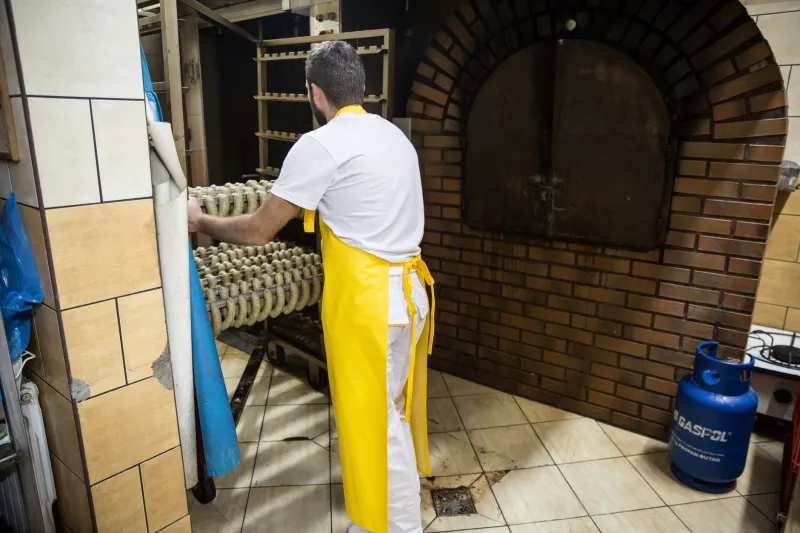
It's 12:47 a.m. on a Thursday in Columbus, Ohio, and Renata Osei is already on her second batch of brioche dough. The shop won't open for another six hours. The street outside is empty. The only sounds are the low hum of the proofer, the rhythmic slap of dough against a floured surface, and a playlist of 90s R&B that she keeps at a volume just loud enough to stay awake but low enough not to disturb the neighbors.
This is the night shift. This is where donuts actually come from.
The Math Behind the Magic Hour
Every craft donut shop that promises "fresh daily" is making a quiet agreement with the clock. Yeast-raised donuts need time — real time — to develop flavor and texture. A properly proofed brioche-style donut dough might take anywhere from eight to fourteen hours depending on temperature, hydration, and the baker's preferred fermentation method. If you want donuts on the shelf at 7 a.m., someone has to start the process the night before.
"People think baking is a morning job," says Osei, who co-owns her shop with her sister. "But the morning is just the performance. The actual work happens in the dark."
This is true across nearly every serious artisan donut operation in the country. The bakers who chase that perfect open crumb, that glossy glaze, that pillowy interior — they've all made the same trade. Sleep happens in the afternoon. Life gets rearranged. Dinner with friends becomes brunch. The 10 p.m. news is something other people watch.
What the Night Shift Actually Looks Like
The process varies by shop, but the broad strokes are consistent. Mixing typically begins between 10 p.m. and midnight. Dough goes through its first rise — the bulk fermentation — which can last two to four hours. Then it's portioned, shaped, and moved to a proofing environment where the individual pieces puff slowly toward their final form. Frying happens in the early morning hours, usually between 4 and 6 a.m., followed by glazing, filling, and decorating before the doors open.
For shops that make cake donuts or old-fashioneds, the timeline compresses a bit — those don't require the same extended fermentation. But for anyone committed to a yeast-raised product, the night shift isn't optional. It's structural.
Jordan Ferris runs a three-person operation in Nashville and starts his shift at 11 p.m. He finishes around 8 a.m., hands off to the counter staff, and drives home to sleep while the rest of the city is stuck in morning traffic. "I've been doing this for six years," he says. "My body just runs on a different clock now. I genuinely feel weird being awake at 9 p.m."
The Science That Thrives in the Quiet
There's a reason experienced bakers often say their best work happens overnight, and it's not entirely poetic. Temperature matters enormously in dough fermentation, and commercial kitchens are measurably cooler at 2 a.m. than they are at 2 p.m. A cooler environment slows yeast activity, which allows more complex flavor compounds to develop before the dough is shaped and fried. The result is a donut with more depth — a subtle tang, a more nuanced sweetness, a texture that holds up longer after frying.
"Slow fermentation is everything," says Priya Mehta, who bakes out of a small shop in Denver and is known for her naturally leavened donuts, which use a sourdough-style starter instead of commercial yeast. Her timeline is even more extended — she sometimes begins her process 18 hours before the shop opens. "You can't rush the flavor. You can rush the shape, you can rush the glaze, but the flavor is honest. It knows if you cut corners."
The night shift also offers something daytime baking can't: silence. No deliveries, no customer questions, no phone calls. Just a baker and their dough, working through the steps with full attention. Many night-shift bakers describe a meditative quality to the work — the repetition of portioning, the rhythm of shaping, the particular satisfaction of a batch coming out of the fryer exactly right when no one else is watching.
The Unexpected Community
You might assume that working alone at 3 a.m. would be isolating. In practice, night-shift bakers describe something closer to a quiet fraternity.
They find each other online — in baking forums, in DM threads, in group chats that stay active between midnight and 5 a.m. when everyone else has gone dark. They share troubleshooting tips in real time. They commiserate about humidity spikes throwing off their proofing. They celebrate when a new glaze comes together perfectly on the first try.
"There's a group of us who text each other at 2 a.m. pretty regularly," says Osei. "Bakers from Atlanta, Seattle, a couple of people in the Midwest. We've never met in person. But we've talked each other through some genuinely hard baking nights."
In cities with multiple craft donut shops, it's not unusual for night-shift bakers to know each other by reputation even if they're technically competitors. The supply delivery windows overlap. The hours are the same. Occasionally, they run into each other at the 24-hour grocery store at 4 a.m., both reaching for the same bag of bread flour, and end up talking shop for twenty minutes in the baking aisle.
The Cost and the Reward
The night shift extracts a toll. Sleep deprivation is real. Social schedules become complicated. Relationships require extra negotiation. Some bakers burn out within a year or two and shift to daytime operations that prioritize speed over fermentation depth.
But the ones who stay — the ones who've built their identity around the craft — tend to be fiercely attached to the schedule. They'll tell you about the particular stillness of a kitchen at 3 a.m. They'll describe the way a perfectly proofed donut looks under fluorescent light before it hits the oil. They'll talk about the moment the shop opens and the first customer takes a bite of something that didn't exist eight hours ago.
"That's the thing people don't understand," says Ferris. "When you buy a fresh donut in the morning, you're buying something someone made in the dark. There's something real about that. It means something."
It does. Next time you walk into your favorite donut shop at 8 a.m. and pull a warm, glazed ring from the case, just know: somebody was up all night making that happen. And they wouldn't have it any other way.