The Last Box: What We Lose When a Beloved Donut Shop Closes Its Doors for Good
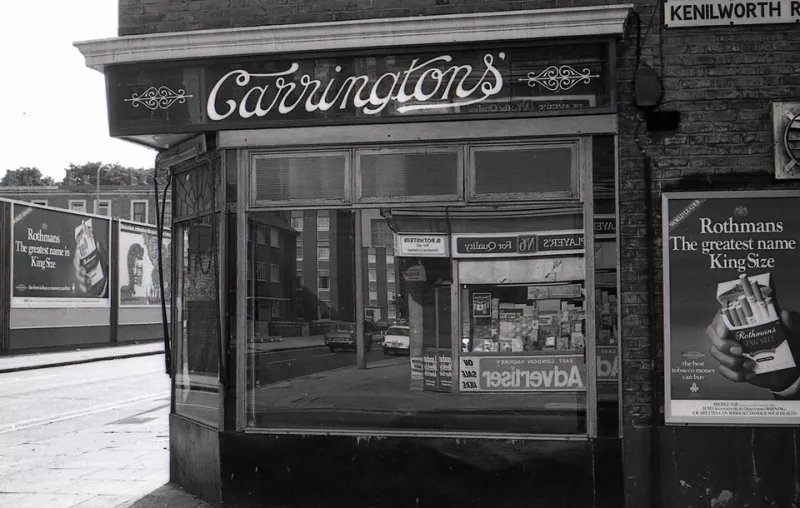
Photo: sludgegulper, CC BY-SA 2.0, via Wikimedia Commons
The sign went up on a Wednesday. By Friday, the line stretched around the block.
This is how it goes when a beloved donut shop announces its closing. The very customers who might have saved it — if they'd come more consistently, told more friends, ordered more boxes — show up in force for the final days, buying a dozen at a time, taking photos, hugging the owner, crying a little. Sometimes crying a lot.
It's a ritual that plays out in American cities and small towns with quiet regularity, and it never gets less heartbreaking.
More Than a Morning Stop
To understand why donut shop closures hit so hard, you have to understand what these places actually are in the lives of the people who love them.
They're not just breakfast spots. For many communities, they function as informal town squares — places where regulars gather not just to eat but to exist alongside each other. The retired guy who nurses a coffee for two hours every morning. The parents who bring their kids on Saturday as a weekly tradition. The coworkers who make a donut run together every Friday because it's become the thing that marks the end of the week.
"That shop was the first place I went after my dad's funeral," says Carla Hutchins, who grew up near a family-owned donut shop in Akron, Ohio that closed in 2022 after 34 years. "Not because I was hungry. Just because I needed to be somewhere that felt normal. The owner knew my name. She gave me a free coffee and didn't make me talk about it."
This is the kind of relationship that can't be replicated by a drive-through window or an app. It's built over years, through small daily interactions that accumulate into something genuinely meaningful.
The Economics of Closing
The craft donut boom has been real and well-documented — specialty shops have thrived in many markets, attracting loyal followings and generating genuine excitement about what a donut can be. But that boom exists alongside a parallel reality: independent food businesses remain extraordinarily fragile, and the pressures on small bakeries have only intensified in recent years.
Rising ingredient costs have been brutal. Flour, butter, eggs, specialty glazing components — all of it has gotten significantly more expensive. Labor costs have climbed in most states. Lease renewals in gentrifying neighborhoods often come with rent increases that make the math impossible, regardless of how beloved the shop might be.
"People think because we had a line out the door, we were doing great," says Daniel Kwan, who closed his San Diego donut shop in late 2023 after nine years in business. "But the margin on a donut is thin. It was always thin. When our rent went up 40 percent and our flour costs doubled, the line out the door wasn't enough anymore."
For many shop owners, the decision to close comes after months or years of quietly absorbing losses, cutting hours, reducing staff, and hoping the numbers will eventually work out. By the time the closure is announced, the owner has often been grieving for a long time already.
The Announcement and What Follows
The social media announcement of a beloved shop's closure has become its own specific kind of cultural moment. The post goes up — usually something simple and sincere, thanking the community — and within hours, it's being shared thousands of times. Comment sections fill with memories. Former customers who moved away express genuine anguish. Local news picks it up.
The outpouring is real, and shop owners describe it as both deeply moving and a little painful. Because all that love, expressed so visibly in the final days, raises an uncomfortable question: where was it before?
"I don't say that to make people feel bad," Kwan says carefully. "People have busy lives. They come when they can. But there were weeks where I was worried about making payroll, and then the closing announcement goes up and suddenly everyone in the city acts like we were their favorite place. It's a lot to hold."
This is one of the harder truths about how communities relate to small food businesses. We tend to take them for granted when they're there and mourn them loudly when they're gone.
What the Neighborhood Loses
Beyond the emotional dimension, donut shop closures represent a concrete loss of what urban planners and sociologists call "third places" — the spaces that aren't home and aren't work but serve essential social functions in community life.
These spaces are already disappearing from American cities at an alarming rate. Bookstores, barbershops, diners, neighborhood bars — all have declined significantly over the past two decades. Each closure removes another option for the kind of low-stakes, unhurried human interaction that researchers consistently link to mental health and community cohesion.
A donut shop is, in many ways, the most democratic of third places. The price of entry is a dollar or two. There's no dress code. Nobody's checking your credentials. You can stay as long as your coffee lasts, and the person next to you might be a retired teacher or a college student or someone just passing through town who stumbled in out of the cold.
When that space closes, something specific and irreplaceable goes with it.
The Ones Who Stay and the Ones Who Leave
Not every closure is permanent. Some shops find buyers who want to preserve what was built rather than replace it. A few owners have found creative paths forward — pivoting to wholesale, launching pop-ups, or restructuring as smaller operations with lower overhead.
But for every shop that finds a second life, many more simply end. The equipment gets sold. The recipes go into a drawer. The regulars scatter to other spots that are fine but not the same.
Some communities have tried to intervene — fundraising campaigns, crowdfunding efforts, local investment structures — with mixed results. The economics of a donut shop are hard to fix with goodwill alone.
How to Love a Shop While It's Still Open
If there's a practical takeaway from all this grief, it might be simpler than it sounds: show up now. Not when the closing sign goes up. Now.
Buy the box on a Tuesday, not just on special occasions. Tell someone else about the shop. Leave the review before you need to write the eulogy. Ask the owner how things are going and mean it.
The craft donut boom has given Americans access to some genuinely extraordinary food made by people who care deeply about what they're doing. That's worth protecting — actively, consistently, not just in the final days.
Because the last box is never as good as it should be. Not because the donuts got worse. But because you know it's the last one.