To Dunk or Not to Dunk: America's Most Delicious Argument
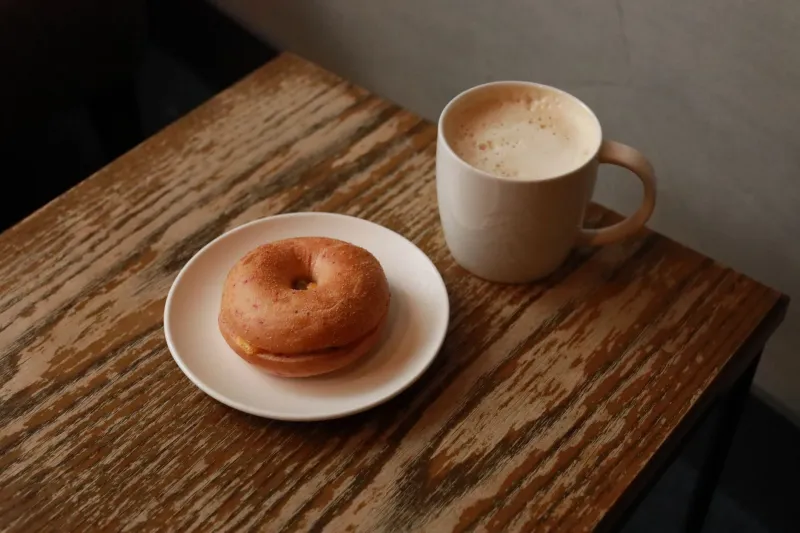
It starts innocently enough. You're sitting at a diner counter, fresh glazed donut in one hand, mug of hot coffee in the other. You lower the donut toward the surface of the liquid. And then — do you dip? Do you submerge? Do you hold it for two seconds or five? Do you even dunk at all?
Ask that question out loud and you'll find out real fast that Americans have opinions.
The donut dunk is one of those everyday rituals that nobody talks about until somebody does it wrong in front of them. Then suddenly everyone has a methodology, a philosophy, and a slightly wounded look on their face when you don't agree. We dug into the science, hit up donut shops from Portland to Pittsburgh, and talked to some seriously passionate dunkers to get to the bottom of this glazed, caffeinated controversy.
The Basic Camps (and Why They Each Think They're Right)
Broadly speaking, American dunkers fall into a few distinct schools of thought.
The Dipper barely grazes the surface — a quick touch, maybe half a second, just enough to pick up a hint of warmth and flavor without compromising the donut's structural integrity. These folks tend to be protective of texture. They want the contrast between the crisp exterior and the soft interior, and they're not about to let hot liquid ruin that.
The Plunger goes full send. Three, four, sometimes five seconds of full immersion. They want the donut saturated, softened, transformed. "It becomes something else entirely," said Marcus T., a regular at a Chicago bakery who's been dunking donuts in black coffee since he was a kid watching his grandfather do the same. "It's not a donut anymore. It's dessert soup on a stick and I am for it."
The Non-Dunker — and yes, this is a valid camp — refuses to compromise the donut at all. These purists argue that a well-made specialty donut doesn't need a liquid assist. "If your donut needs to be dunked to taste good, the donut isn't doing its job," said Priya Nair, co-owner of a small-batch donut shop in Austin. She's not wrong, exactly. But she's also not making a lot of friends at the breakfast table.
What the Science Actually Says
Here's where it gets interesting. There's legitimate food science behind why dunking works — or doesn't.
Lenora Vasquez, a food science consultant who's worked with several artisan bakery brands, breaks it down simply: "Dunking accelerates flavor transfer. The heat from coffee or the fat content in whole milk helps pull aromatic compounds out of the donut and into your mouth faster. It's essentially a delivery mechanism."
But timing matters enormously. Vasquez points to capillary action — the way liquid is drawn into the porous structure of a fried dough — as the key variable. "A yeast-raised donut has larger air pockets than a cake donut. It absorbs liquid faster. So a five-second dunk in a yeast glazed is going to get you a very different result than a five-second dunk with an old-fashioned."
Temperature is the other wildcard. Coffee at 180°F versus 140°F creates a meaningfully different dunking experience. Hotter liquid penetrates faster and more aggressively. If you're a Dipper, you probably want your coffee a little cooler. If you're a Plunger, scalding hot is your best friend.
And milk? Whole milk dunking has its own devoted following, particularly in the Midwest and parts of the South. The fat content softens the donut differently than coffee — less of a flavor collision, more of a gentle merge. "Milk dunking is the gentle hug version," said one Ohio bakery owner. "Coffee dunking is more of a handshake. Firm. Intentional."
Regional Loyalties Run Deep
Like so many American food rituals, dunking preferences have a strong geographic flavor.
In New England, dunking in coffee is practically a birthright — tied to the region's deep diner culture and its almost aggressive relationship with hot beverages. Dunkin' (yes, that Dunkin') didn't build its early empire in Boston by accident. The quick dip is standard there, usually into regular coffee with cream and two sugars.
In the South, sweet tea dunking is a thing — though it's niche enough that most people outside the region raise an eyebrow. "I grew up dunking biscuits in sweet tea, so moving to donuts wasn't a leap," said a customer at a bakery in Nashville. "It works. Don't knock it."
The Pacific Northwest, home to serious coffee culture, tends toward the precision dunk — specialty espresso drinks, carefully timed immersion, treated with the same reverence you'd give a pour-over ratio. Portland donut shops have reportedly fielded questions from customers about optimal dunk windows for specific roast profiles. That tracks.
The Great Plains and Midwest? Milk dunking territory. It's nostalgic, unpretentious, and deeply tied to the idea of donuts as a family breakfast food rather than a specialty treat.
The Donut Itself Changes Everything
One thing nearly every shop owner and food nerd agreed on: the dunking calculus changes completely depending on the donut.
A classic glazed? Built for dunking. The glaze softens and blooms in hot liquid in a way that's almost magical. A filled donut — bavarian cream, jelly, anything with a pocket of goodness inside — is a dunking risk. Too long in the liquid and the structural walls give out. You've been warned.
A cake donut, with its denser crumb, can handle a longer soak. An old-fashioned, with its craggy, ridged surface, is a dunking goldmine — all that extra surface area means more contact, more flavor exchange, more of that soft-crisp transformation dunking fans chase.
Fancy specialty donuts — the ones loaded with toppings, filled with pastry cream, or glazed in something architectural — are generally considered no-dunk zones by their creators. "I've seen people try to dunk a donut with a torched meringue topping," said one bakery owner in Denver. "It doesn't end well for anyone."
Does Anyone Actually Win This Debate?
Short answer: no. And honestly, that's fine.
The donut dunk is personal in the way that a lot of food rituals are personal — shaped by memory, family habit, regional culture, and the specific donut in front of you. There's no objectively correct technique, even if food science can tell you what's happening at a molecular level when you submerge that glazed ring into your morning cup.
What we can say with confidence is this: dunking is an act of engagement. It's a sign that you're not just eating a donut — you're experiencing it. You're making a choice about how you want that moment to feel. And that, more than any dunking technique, is what keeps people coming back to the counter every morning.
So go ahead. Dip, plunge, or refuse entirely. Just don't tell anyone else they're doing it wrong.