Little Balls, Big Business: How Craft Bakeries Turned Donut Holes Into Their Most Profitable Product
For most of American donut history, the hole was the afterthought. The ring was the product. The center punch — that small, coin-sized disc of raw dough — was either fried up for staff snacks, tossed into a bag for cheap upsells, or quietly discarded before customers ever noticed it existed. It was the trim on a bolt of fabric. The rind on a wheel of cheese. Useful, maybe, but never the point.
That's changing fast.
At specialty donut shops from Portland to Philadelphia, donut holes are getting a full-on glow-up — plated as curated tasting flights, rolled in exotic sugars, stuffed with flavored creams, and priced accordingly. What was once a scrap is becoming, for some bakeries, one of their most talked-about items. And the economics behind the shift are worth paying attention to.
The Byproduct That Forgot Its Place
Let's back up for a second. Traditional cake and yeast donuts are shaped by cutting a ring out of rolled or extruded dough, which leaves a small center disc behind. In high-volume shops, those discs get fried alongside the rings and sold cheaply — usually bagged in bulk, often as an afterthought near the register. The Munchkin made Dunkin' famous for them. Tim Hortons has Timbits. The concept isn't new.
But what's new is the framing.
Craft bakers — the same people who've spent the last decade redefining what a glazed ring can be — are now applying that same obsessive creativity to the hole. And when you approach a donut hole the way a chocolatier approaches a truffle, the results get interesting in a hurry.
"We started calling them 'bites' instead of holes," says the owner of a small-batch bakery in Nashville who asked to stay anonymous because she's in the middle of rebranding. "Immediately, people perceived them differently. Same product. Different word. The average ticket went up."
The Flight Model: Borrowing From Craft Beer
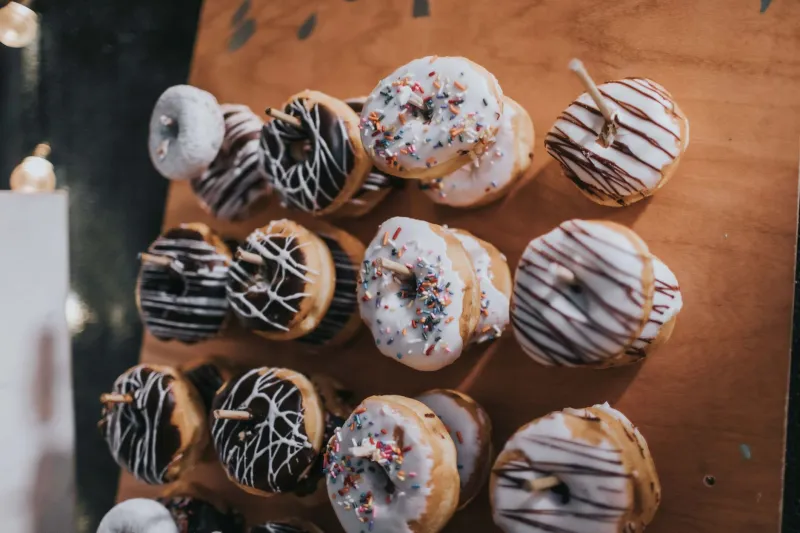
One of the more clever moves happening in the donut world right now is the tasting flight — a direct lift from the craft beer playbook. Instead of selling a dozen holes in a wax bag, some shops are offering curated sets of four to six holes, each rolled in a different coating or filled with a rotating flavor, served on a small wooden board or in a divided box.
The presentation alone does a lot of work. Suddenly, customers aren't buying a snack — they're having an experience. They're comparing flavors, debating favorites, photographing the spread. Social sharing goes up. Perceived value goes up. And the margin? Also up.
At one Brooklyn shop that introduced a seasonal flight last fall — rotating through brown butter, black sesame sugar, and a cardamom-orange coating — the holes became the most-Instagrammed item they'd ever offered. The cost to produce each flight was only marginally higher than a standard bag of holes. The retail price was nearly triple.
That's not exploitation. That's curation.
The Sugar Roll Rabbit Hole
Beyond flights, the coating game is where some of the most creative donut hole innovation is happening. Classic cinnamon sugar is the baseline — everyone does it. But the shops pulling ahead are going deeper.
Think: toasted coconut and lime zest. Espresso sugar with a pinch of smoked salt. Crushed freeze-dried strawberry mixed into powdered sugar. Tajín and chili-lime for shops in markets where that flavor profile has already proven itself on the donut ring. Matcha sugar with white sesame. The coating becomes the whole identity of the bite, and because the canvas is small, the flavors hit fast and hard.
"With a full donut, you have to balance the coating against the dough, the glaze, the filling," explains Marcus Webb, a pastry consultant who's worked with several indie bakeries on menu development. "With a hole, the coating IS the donut. You can go bolder because there's less dough to compete with it."
That boldness translates to menu variety without the overhead of developing entirely new donut recipes. The dough stays the same. The coating changes everything.
The Sustainability Angle Nobody's Ignoring
Here's where the story gets a little more serious, and a little more relevant to where food culture is headed. Waste reduction is increasingly a selling point — not just an operational concern. Consumers, especially younger ones, are paying attention to how businesses handle their byproducts. A bakery that can say "we use every part of the dough" is speaking a language that resonates.
Some shops have leaned into this explicitly. A donut bakery in Denver started marketing their hole program under a "zero-waste kitchen" banner, pointing out that the punched centers used to go into the compost bin before they developed their current flight menu. The response from customers was enthusiastic — not just because the holes tasted good, but because the framing made people feel good about buying them.
It's a small thing in the grand scheme of sustainability. But in a food culture increasingly attuned to where things come from and where they go, it matters.
What the Pricing Psychology Actually Looks Like
Let's talk numbers for a second, because the business case here is genuinely compelling. A standard donut at a craft shop might retail for $4 to $6. A bag of a dozen holes at the same shop might go for $5 to $7 — which sounds like a deal until you do the math on how many holes you get per ring.
But a curated flight of six specialty holes? That same shop might charge $8 to $12. The dough cost is lower than a full donut. The labor to coat and plate is comparable. The perceived value, though, is elevated by presentation, naming, and the novelty factor.
Customers aren't doing a cost-per-ounce calculation at the register. They're responding to how something looks, how it's described, and whether it feels like something worth trying. Donut holes, when presented right, clear all three bars easily.
The Regulars Are Buying In
Maybe the most telling sign that this trend has legs? The repeat customers. Shops that have introduced specialty hole programs report that the holes bring people back on off-days — the Tuesday afternoon visits that wouldn't happen if someone had to commit to a full donut. The bite-sized format lowers the stakes. People try more. They come back for their favorites.
That's the kind of loyalty that builds a business slowly and steadily, one small sphere at a time.
The donut hole spent decades being the thing nobody talked about. It's having its moment now. And if the bakers who've figured this out are any indication, it's not going anywhere — except maybe onto a beautifully photographed wooden board near you.