Four Hours to Glory: Following One Batch of Donuts From 2 A.M. Proof Box to Closing Case
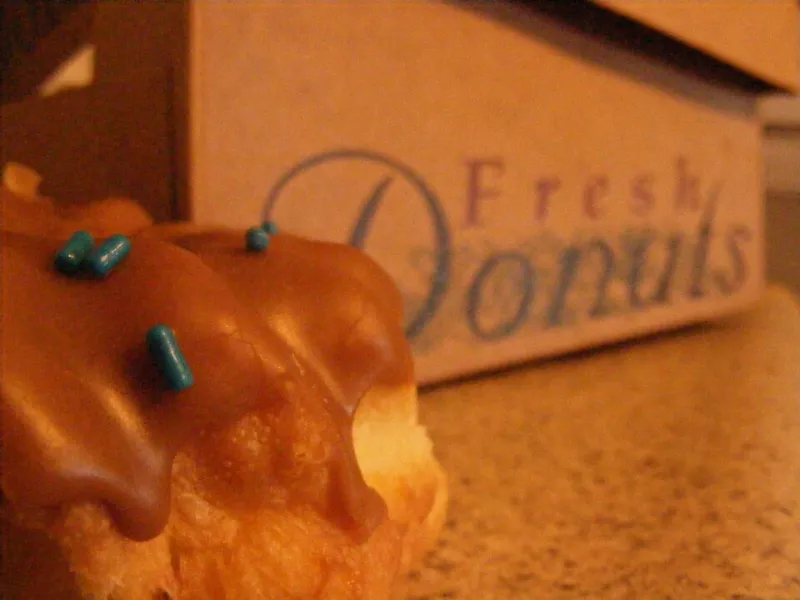
Photo: Nick Perla from U.S.A., CC BY-SA 2.0, via Wikimedia Commons
Every donut you've ever loved was on a clock the second it left the fryer.
Most of us never think about it. We walk in, we point at something glazed, we eat it, we move on with our day. But behind that counter is a countdown — a narrow window where the dough that went into the proof box at 2 a.m. is still everything the baker intended it to be.
We spent a full shift with Rosa Delgado, co-owner of a small craft donut operation outside Columbus, Ohio, tracking a single batch from start to finish. What follows is the life of a donut, hour by hour.
2 A.M.: The Proof Box Whispers
The batch we followed hit the proof box at 2:10 a.m., roughly ninety minutes after mixing. Inside the humid, 85-degree cabinet, yeast is doing the only job that matters: eating sugar, exhaling carbon dioxide, puffing the dough into something cloudlike.
"You can't rush it and you can't walk away from it," Delgado told us, poking a test piece with one finger. "Under-proofed, it's a hockey puck. Over-proofed, it collapses in the oil. There's about a twenty-minute window."
Twenty minutes. Out of an entire night. That's the invisible ingredient nobody lists on the menu.
4 A.M.: Fry Time — The Point of No Return
At 4:15, the batch hits 375-degree oil. In roughly ninety seconds per side, the magic happens: water in the dough flashes to steam, the structure sets, and that iconic pale ring turns golden. Bakers call the flip "the moment of truth" — an under-proofed donut won't flip properly, and an over-proofed one absorbs oil like a sponge.
Straight out of the fryer, a donut isn't actually at its best. It needs ten to fifteen minutes to cool, or the glaze melts into a sad puddle instead of setting into that delicate crackle.
5:30 A.M.: The Golden Hour
Here's the part most people don't know: a donut's absolute peak is a shockingly narrow window — roughly thirty minutes to two hours after glazing, depending on the style.
"A glazed yeast donut at 6 a.m. is a different food than the same donut at noon," Delgado says. "Same recipe. Same baker. Totally different bite."
The science is straightforward. Freshly fried dough is still steaming internally, which keeps the crumb tender and the exterior just crisp. As hours pass, moisture migrates outward, the crust softens, and the starches retrograde — the technical term for staling. Nothing is spoiled. It's just... less alive.
8 A.M.: The Rush — and the Trade-Off
Morning rush is when most customers meet the batch, and honestly, they're still getting a great product. But the pros can tell. Delgado's team holds back nothing overnight and instead fries in staggered waves — a trick borrowed from the big chains but executed at small-batch scale.
"We'd rather sell out at 11 than have a beautiful case at 3," she laughs. "Scarcity is a quality control program."
Noon to Close: The Long Tail
By afternoon, that first batch is a memory — sold, or pulled and repurposed into donut-pan French toast specials. What's in the case now is batch three or four, still perfectly respectable, but structurally a different creature than what the 6 a.m. crowd got.
Some shops lean into this with "day-old" discounts or second-fry techniques. Others simply accept the loss. The honest ones will tell you the same thing Delgado did: "Timing isn't part of the recipe. Timing IS the recipe."
Why This Matters to Your Taste Buds
The takeaway isn't that afternoon donuts are bad — it's that you should match the donut to the hour. Yeast-raised glazed? Go early or don't bother. Cake donuts, with their denser crumb, hold up beautifully for hours and are arguably better at 2 p.m. Filled brioche styles split the difference; the filling keeps them moist even as the dough settles.
So the next time you bite into something transcendent at 6:45 a.m., know this: you caught it in its four hours of glory. And the baker who pulled it from the oil before sunrise? They timed it just for you.