Worth Every Dollar: The Real Reason Craft Donuts Cost More — and Why Customers Keep Coming Back
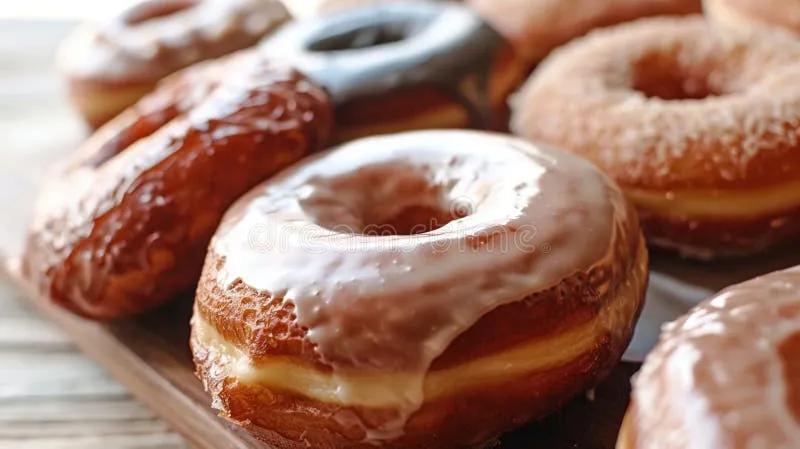
Photo: artisan donut close up with glaze and toppings on wooden counter, via thumbs.dreamstime.com
Let's be honest: the first time you saw a $4 donut on a chalkboard menu, your eyebrow probably went up. Maybe you laughed a little. Maybe you walked out. But then your friend ordered one, and you watched them take that first bite, and something shifted. You got in line.
That moment — that quiet conversion — is exactly what craft donut shops are banking on. And it's working.
Across the country, independent bakeries are charging anywhere from $3.50 to $7 for a single donut, and customers are not just accepting it. They're coming back. They're posting about it. They're driving across town for it. So what's actually going on here?
The Ingredient Gap Is Real
Mass-market donut chains run on efficiency. Their supply chains are optimized to the cent, their ingredients sourced at industrial scale, and their recipes engineered for consistency across hundreds of locations. That's not a criticism — it's just how that business model works.
Craft bakeries operate in an entirely different world.
When a small shop in Portland sources its cream from a regional dairy, or a bakery in Nashville uses local wildflower honey in its glaze, or a shop in Chicago hand-tempers single-origin chocolate for a ganache topping — those decisions cost money. Real money. A 50-pound bag of commodity flour might run a large chain operation a few dollars per donut in raw materials. A craft shop using stone-milled heritage grain flour, organic eggs, and cultured butter can spend three to four times that before a single donut hits the fryer.
Ingredient sourcing isn't just a line item for these bakers. It's a values statement. And values, as it turns out, have a price.
Labor Intensity That Doesn't Scale
Here's something most people don't think about when they're standing at a donut case: how many hours of human hands went into what they're looking at.
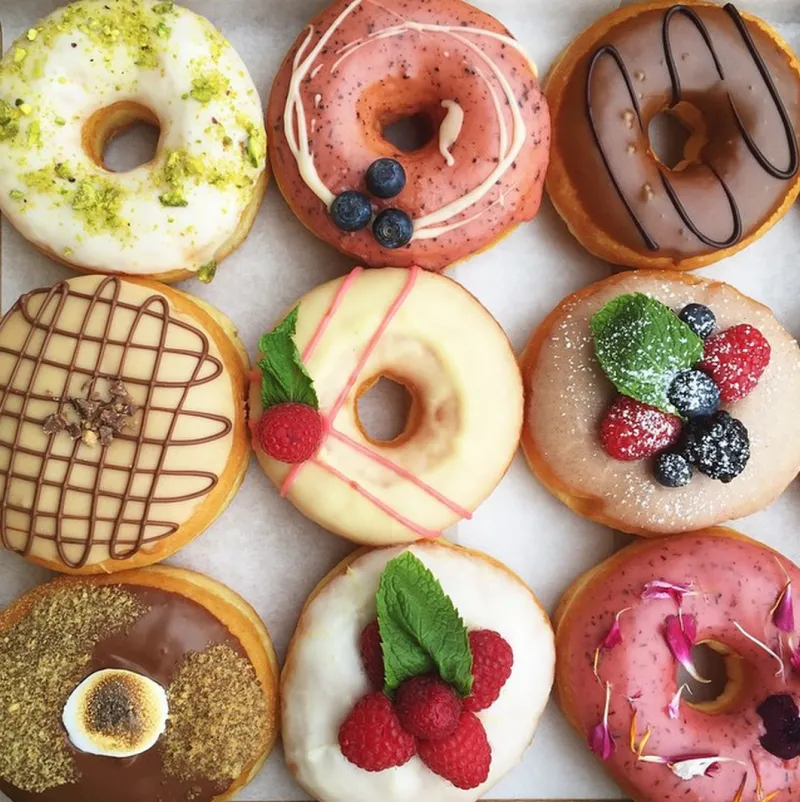
A filled brioche donut with a hand-piped passion fruit curd, dipped in a mirror glaze and finished with toasted coconut — that's not a 30-second operation. The dough may have proofed overnight. The curd was likely made from scratch. The glaze requires precise temperature control. Each donut is piped, dipped, and decorated individually.
Craft shops often run small crews — sometimes just the owner and one or two bakers — working before dawn to have product ready by opening. There's no automation doing the heavy lifting. It's skilled labor, and skilled labor costs what it should cost.
When you pay $4 for a donut at your local indie shop, a meaningful chunk of that is going to the person who made it. That's not a bug in the pricing model. It's the whole point.
The Psychology of Perceived Value
Pricing psychology is fascinating, and craft donut shops — whether they know it or not — are running a masterclass in it.
Research on consumer behavior consistently shows that people use price as a proxy for quality, especially in food categories where they can't easily evaluate quality before purchase. A $1.50 donut signals one thing. A $4 donut signals something else entirely — before a single bite has been taken.
But craft shops don't just rely on the number on the tag. They layer in other signals. The chalkboard menu with seasonal ingredients listed out. The open kitchen where you can watch the baker work. The Instagram-worthy packaging. The story behind the recipe. All of it builds a case for why this donut is worth what it costs.
Shops that do this well aren't just selling a pastry. They're selling an experience, a connection to a maker, and a small moment of genuine indulgence. That's a different product than a box of glazed from a drive-through window, and it commands a different price.
Small Batches, Real Margins
Here's a counterintuitive truth about craft donut economics: making fewer donuts doesn't automatically mean losing money, even at higher per-unit costs. What it does mean is that every single unit has to carry its weight.
Many craft shops intentionally limit their daily output — sometimes to just a few hundred donuts. This creates scarcity, which reinforces demand. It also means the shop can maintain quality control in a way that a 2,000-donut-a-day operation simply can't.
The margins on a $4 specialty donut, when ingredients and labor are accounted for, can actually be competitive with mass-market operations — not because the costs are lower, but because the price point is higher and customers accept it. Sell out by noon, and you've had a good day.
Storytelling as a Pricing Tool
One of the most underrated strategies in craft donut pricing is narrative. The best independent shops are exceptional storytellers.
They name their donuts after local landmarks. They explain on their website why they chose this particular vanilla supplier. They post behind-the-scenes videos of the dough being laminated at 4 a.m. They talk about the grandmother's recipe that inspired the cinnamon sugar crunch on their signature old-fashioned.
All of this storytelling does something important: it makes the product feel irreplaceable. You can't get the same thing somewhere else, because somewhere else doesn't have the same story. That irreplaceability is worth money to consumers who care about it — and in 2024, a lot of consumers care about it.
The Loyalty Payoff
Here's where the craft donut pricing model gets really interesting: it doesn't just work in the short term. It builds loyalty in a way that a $1.50 donut almost never does.
When someone pays $4 for a donut and it genuinely delivers — on flavor, on texture, on the whole experience — they don't just feel satisfied. They feel validated. They made a good call. They found something worth finding. And that feeling creates a customer who comes back, who tells friends, who tags the shop online.
The math compounds. A customer who visits once and spends $4 is fine. A customer who comes back every Saturday for a year and brings someone new each time is a business.
Craft donut shops aren't just charging more per donut. They're building a different kind of relationship with their customers — one where the price is part of the signal that this place is worth your time, your loyalty, and yeah, your four dollars.
So the next time you hesitate at the chalkboard menu, just know: that hesitation is the whole game. And most of the time, the donut wins.